
 MassBioEd
 2026 Life Sciences Workforce Conference Agenda
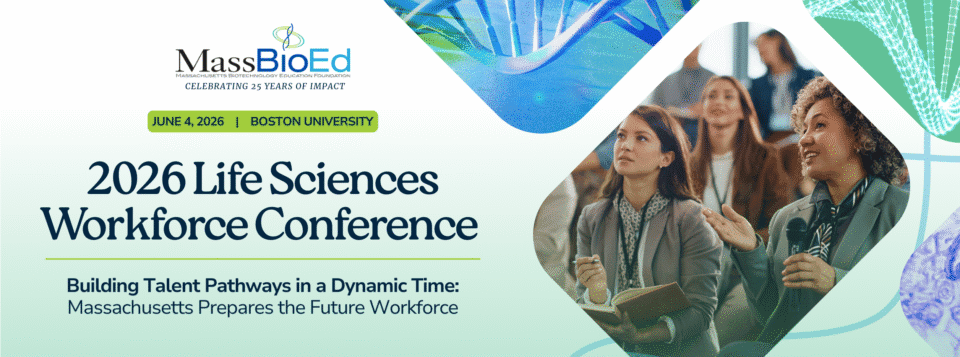
Building Talent Pathways in a Dynamic Time: Massachusetts Prepares the Future Workforce
Registration and Breakfast
8:00 AM – 9:00 AM | Stone Lobby/Ziskind Lounge
Exhibitors
8:00 AM – 4:00 PM | Ziskind Lounge
Morning Plenary Sessions
Metcalf Hall
Opening Remarks & Welcome | 9:00 AM – 9:40 AM

Welcome
Stéphane Lamour
Process Technician, Pfizer

Welcome
Sunny Schwartz
Chief Executive Officer, MassBioEd
Morning Keynote Conversation
Setting the Stage | 9:40 AM – 10:25 AM
Industry, Higher Education, Government, and Non-Profit Workforce Priorities Respond to a Dynamic Environment
As we navigate a dynamic environment, assessing and recalibrating our collective workforce development strategy in Massachusetts is essential to maintaining our leadership position and preparing the future workforce. Setting the stage for this year’s conference, industry, higher education, public, and nonprofit leaders will discuss the current landscape of life sciences workforce development, focusing on how this work is impacted by macro dynamics and what implications this has for future investment and program strategy.

Vice President of Workforce Development and Operations, MassBioEd

Dean, College of Professional Studies, Northeastern University

Vice President, Product Development and Supply Business Insights & Technology, Bristol Myers Squibb

Chief Executive Officer, Massachusetts Life Sciences Center

Vice President of Operations and Site Leader, Pfizer, Andover
Workforce Skills | 10:25 AM – 10:35 AM
The Commonwealth Perspective
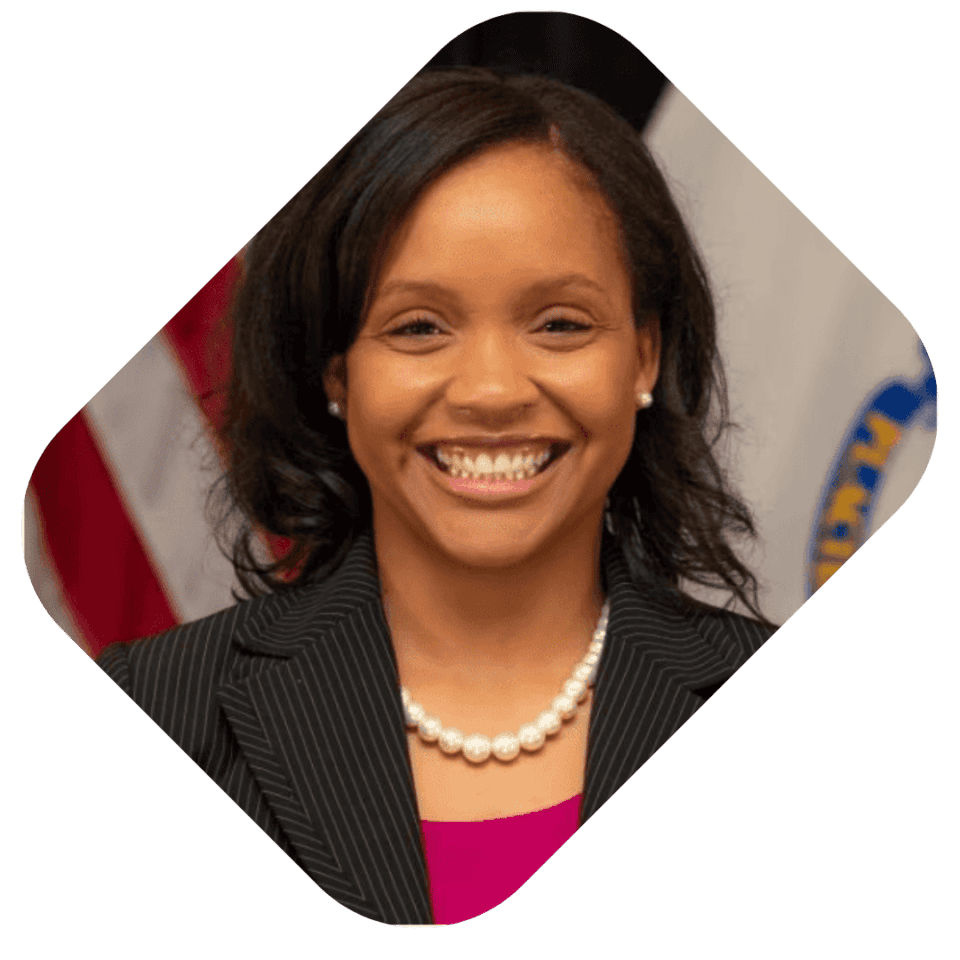
Secretary Lauren Jones
Massachusetts Executive Office of Labor and Workforce Development
The Workforce Outlook | 10:35 AM – 11:10 AM
New Employment, Education, and Training Data Paint a Picture of an Industry in Transition
The annual Massachusetts Life Sciences Employment Outlook analyzes employment data, hiring demand, and skills requirements and forecasts job trends and their impact on the state’s education and training institutions in supplying critical talent. Economists from TEConomy Partners, who produced this year’s Outlook, will share key findings and updates on key Massachusetts life sciences workforce data.

Senior Director, Workforce Development Strategy, MassBioEd

Principal & Senior Director, TeConomy Partners, LLC
Networking Break
11:10 AM – 11:30 AM | Ziskind Lounge
Morning Breakout Sessions
11:30 AM – 12:30 PM
Credentials That Count
How Higher Ed is Meeting Life Sciences Workforce Demand | East Balcony
Microcredentials are gaining real traction in the Massachusetts life sciences workforce — but their full potential depends on what happens after the first credential is earned. Can a microcredential stack toward a certificate? Toward a degree? Into the next job level? And how do institutions design programs that make that progression real rather than theoretical?
This session brings together higher education researchers and practitioners to examine how institutions are designing microcredential programs that don’t just open doors — they build pathways. Panelists will address what the research tells us about learner engagement and outcomes in STEM microcredential programs; how training providers are developing life sciences microcredentials that are employer-validated, stackable, and connected to career progression in biotech and biomanufacturing; and how community colleges are sequencing short-term credentials into longer-term workforce and academic pathways.
Dean, College of Professional Studies, Northeastern University
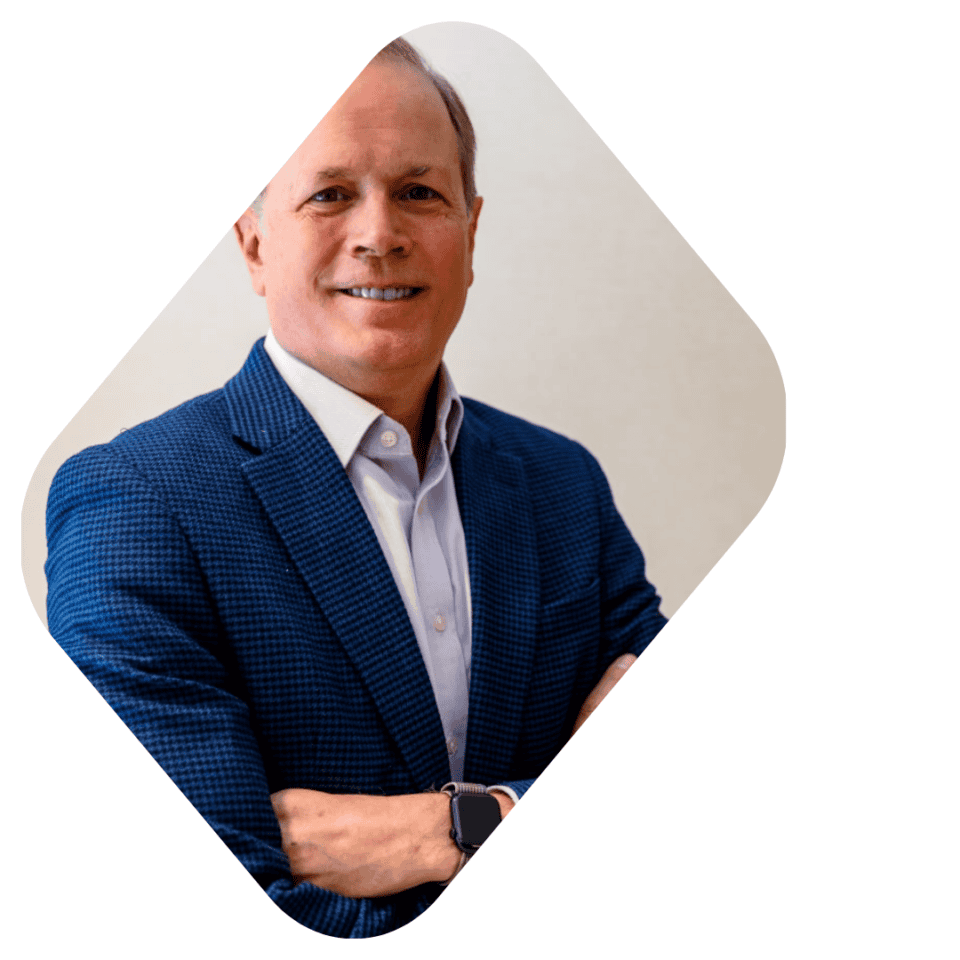
Former Massachusetts Secretary of Education

Director of Supplemental Academic Support & Assistant Teaching Professor, Northeastern University

STEM Dean, Middlesex Community College

Assistant Professor of Educational Technology, University of Florida

Director of Educational Programs and Grants, LabCentral
Demystifying Early Talent
Companies Reflect on Strategy, Impact, and Opportunities | Metcalf Hall
Members of the MassBioEd Early Talent Recruitment Coalition, (METRC), share insights from behind the scenes of what drives recruitment for emerging talent in life sciences, including workforce planning, internships, co-ops, and conversion strategies. This could be educational for university and program partners, thinking about how to engage with life sciences to create opportunities for their students.
A session dedicated to hearing what schools want from companies in order to create strong opportunities for their students, what companies want from schools, what are non starters for both, and where can we find commonality. Year over year, both parties listen to each other but often come up short with an answer. This will help at least see where we can bridge gaps.

Director, Talent Acquisition Programs, Blueprint Medicines, a Sanofi Company

Global University Relations Lead, Takeda

Lead, Early Talent & Strategy Biogen

Director, HR Business Partner, Beam Therapeutics

Program Manager for Early and Emerging Talent Strategy, Ultragenyx
Data Deep Dive
How Our Workforce Data Stack Up and Why it Matters | Metcalf Small Ballroom
Join the author of the MA Life Science Employment Outlook for a “Data Deep Dive” into the latest life sciences employment data while leaders from Industry, Government and Higher Ed describe how the data fits with what they are seeing and how they are responding.
Principal and Senior Director, TEConomy Partners, LLC
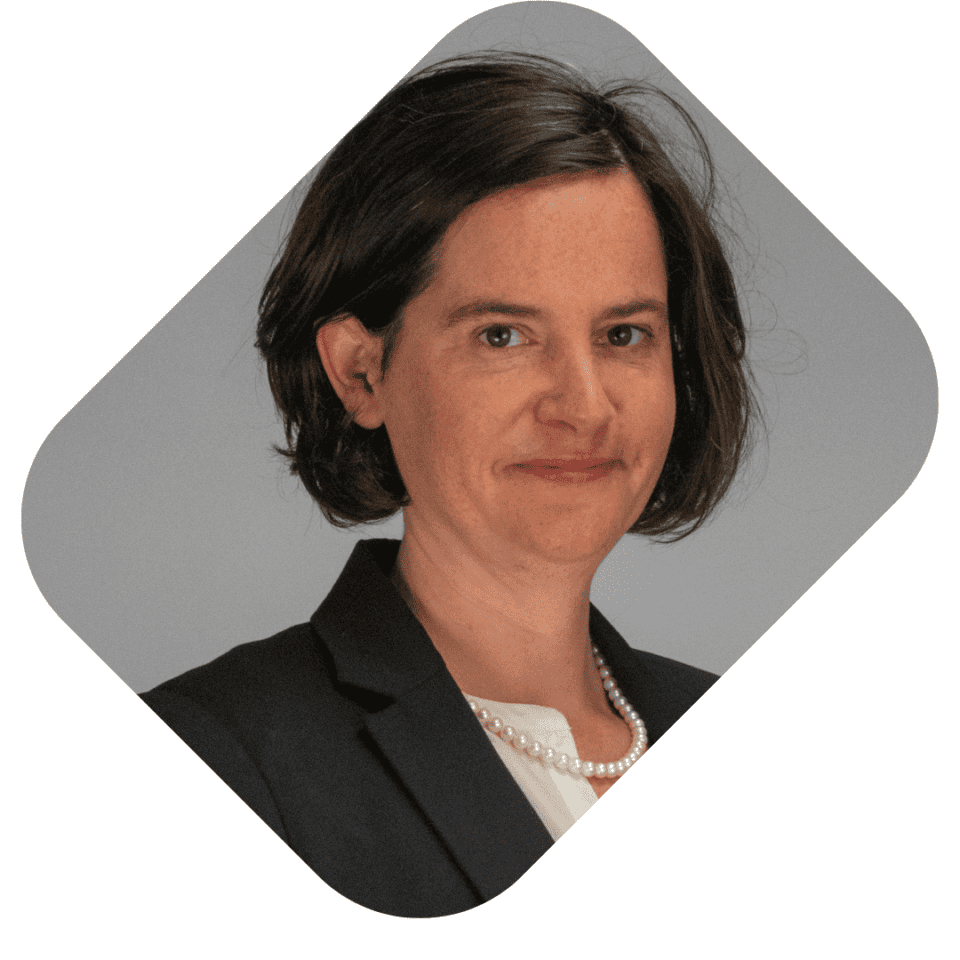
Director of Workforce Grantmaking, Office of Workforce Development, City of Boston
Senior Director, Workforce Development Strategy, MassBioEd

VP, Head of Global Supply Chain, Alnylam

Associate Provost for Academic Initiatives & Operational Excellence, Boston University
Team Massachusetts
Aligning Commonwealth Education, Workforce and Economic Development to Support a Vital Industry | Auditorium
The life sciences industry, and the workforce it employs, represents a vital economic and innovation engine for the Commonwealth. The state’s investments in this industry over the past two decades have contributed significantly to Massachusetts’ global leadership position in the sector. The shared vision and unified strategy of the state executive branch and its executive offices of Education, Labor and Workforce Development, and Economic Development, together forming the Workforce Skills Cabinet, have been a driving force behind the Commonwealth’s success. As the industry continues to rapidly evolve in response to dynamic business and policy realities, we will hear from the three Undersecretaries of these Executive Offices, reflecting on successes to date, lessons learned, and priorities moving forward. They will focus on the value of leveraging the distinct authority of each office in supporting a comprehensive economic growth agenda to benefit all corners of the Commonwealth.
Chief Executive Officer, MassBioEd


Lunch and Networking
12:30 PM – 1:30 PM | Metcalf Hall
Apprenticeship (Information Session)
Best Practices & Wins | Terrace Lounge
Lunchtime Keynote Conversation
1:30 PM – 2:25 PM | Metcalf Hall
Meeting the Moment
Senior Industry Leaders Reflect on Evolving Strategic Priorities and the Path Forward
The life sciences industry is rapidly evolving in response to a dynamic business and regulatory environment and significant, fast-paced advances in scientific discovery and new technology. These changes will not only impact an important sector of the nation’s economy but also its role in driving innovation that improves human health. Key industry leaders will share their insights, challenges, and priorities in navigating this dynamic moment in which the confluence of science, technology, business, and policy is re-shaping a vital sector.
Chief Executive Officer, MassBioEd

Vice President and Head of Viral Vaccines, Pfizer

Chief Operating Officer, Flagship Pioneering

Corporate Vice President, AI and Analytics, Novo Nordisk
Afternoon Breakout Sessions
2:45 PM – 4:00 PM
Industry-Educator Advising Session (By Application ONLY) | Metcalf Hall
The Industry-Educator Advising Session will provide an opportunity for conversations between pre-registered company teams and schools/training providers to deepen each other’s understanding of current talent needs, curriculum, and programs in the Life Sciences.
Sustaining a Vital Pipeline
Challenges and Strategies to Securing Future Scientists | East Balcony
The life sciences industry is facing a growing talent paradox: a temporary surplus driven by hiring slowdowns is masking a looming long-term shortage. As hiring freezes push skilled graduates out of the field and PhD programs contract, the risk of a “brain drain” is real—one that could have significant consequences for the industry in the next 5–10 years.
Without sustained investment from the state and industry, talent may shift to other regions and sectors, weakening the pipeline just as demand begins to rise again. At the same time, AI is reshaping the workforce—creating both new opportunities and new pressures on how talent is trained, deployed, and retained.
This session will focus on high-impact areas, including community colleges and Master’s programs, and explore upskilling pathways to bridge near- and long-term talent gaps. Panelists will spotlight successful models and propose new approaches, including industry-funded PhD and postdoctoral programs, while identifying actionable strategies to expand training opportunities and create alternative career pathways. The conversation will focus on what it will take—now—to retain emerging talent, rebuild the PhD pipeline, and align training with the evolving demands of an AI-driven industry.

Co-founder and CEO of Propel Careers

Dean, Morningside Graduate School of Biomedical Sciences
Professor, Department of Neurobiology,
UMass Chan Medical School

Executive Director, Biological Design Center, Boston University

Executive Director, Nonclinical Gene Therapy Research, Ultragenyx

VP, Talent Acquisition & Executive Search, Flagship Pioneering
AI and the Pace of Change
How Life Sciences Companies are Keeping Up | Metcalf Small Ballroom
Breakthrough science and AI are transforming biopharma—from discovery through delivery—but success rates remain low. Increasingly, the challenge is not just pipeline and manufacturing risk, but how effectively organizations build and deploy talent to translate innovation into approved, commercially viable therapies – and how educators can prepare that talent to succeed.
This session explores how companies are rethinking the use of AI across every stage of development and commercialization. As AI accelerates workflows and decision-making, impact depends on teams that can integrate biology, data science, clinical strategy, regulatory insight, and market understanding.
Panelists will discuss how to:
- Build cross-functional teams that connect science, data, and commercial strategy early
- Embed translational and market access perspectives from day one
- Leverage AI to improve decision quality—not just speed—across R&D and go-to-market strategy
- Redesign talent models, training, and incentives for emerging challenges
- Define evolving workforce needs to help inform future-ready education and training

Senior Vice President, Global Head of Computational & AI Strategy, R&D, Sanofi

Biopharma Executive / Board Chair/ Global Head of Innovation

Chief Research Officer, Seismic Therapeutic

Global Head, Digital Chemistry & Design, Novo Nordisk